Collection of early printed,
rare and valuable books
The collection of early printed, rare and valuable books is the most valuable part of the M. Maksymovych Scientific Library and an integral part of Ukraine’s national book heritage. The collection comprises over 20,000 copies of early printed, rare and valuable publications dating from the 15th to the 21st centuries.
The majority of the collection consists of publications produced from the dawn of printing up to and including 1830. The collection of early printed books comprises 11,500 volumes published in various European countries, with the Netherlands, Germany, France, Italy, Poland and Switzerland being the most well-represented. A place of honour among the incunabula is held by publications from the renowned printing dynasties of Western Europe in the 16th and 17th centuries: the Aldines, Plantines, Elzeviers and Étiennes.
The subject matter of these publications is diverse and covers virtually all fields of knowledge, including philosophy, theology, history, geography, mathematics, astronomy and medicine, and illustrates the development of European culture and ecclesiastical and civic life during the relevant historical period. Many of these early printed books require further scholarly research and cataloguing.
The books have been printed in over 20 languages and dialects that differ significantly from their modern counterparts – most of them are in Latin, German, French, Italian, Old Slavonic and Polish.
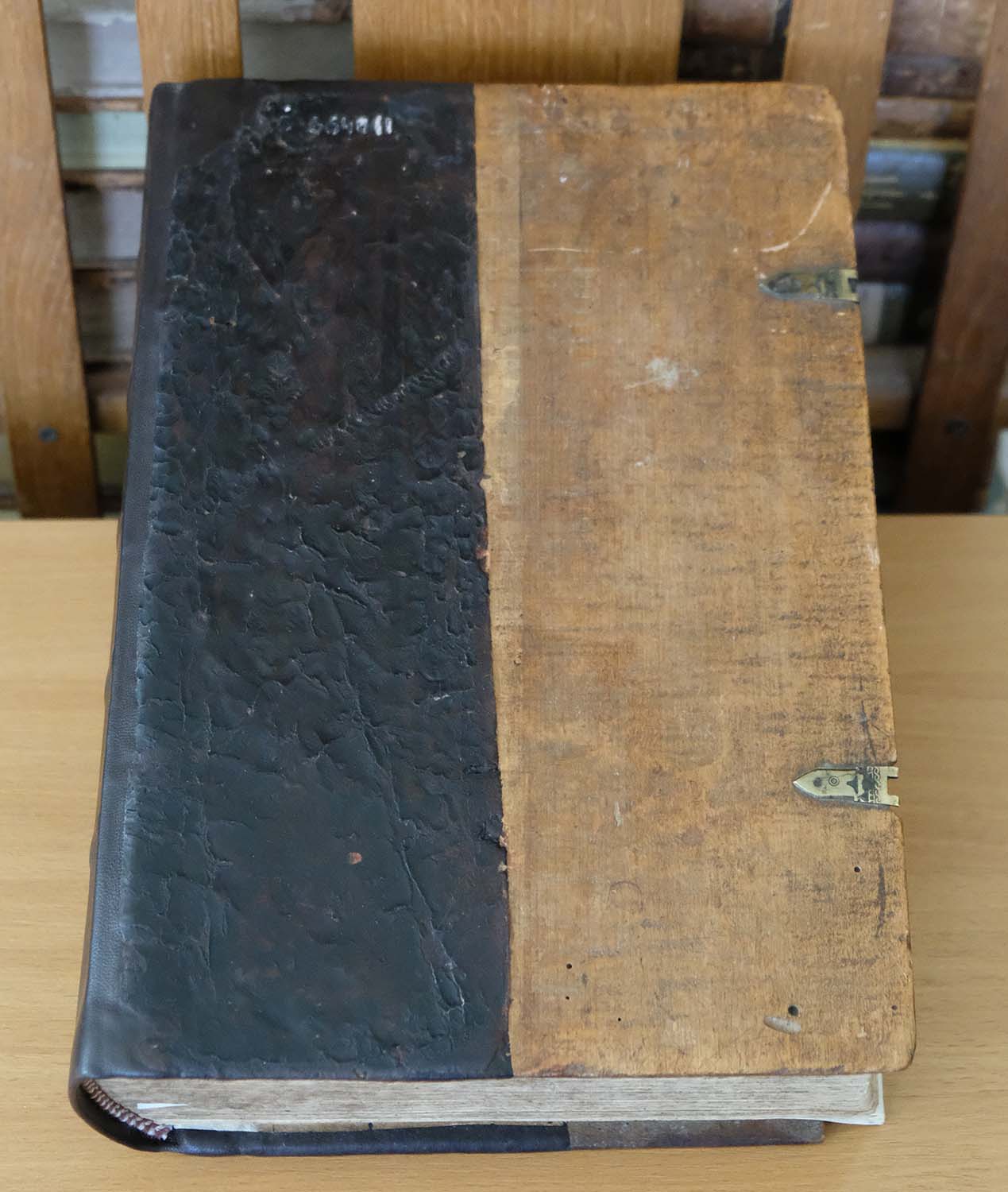
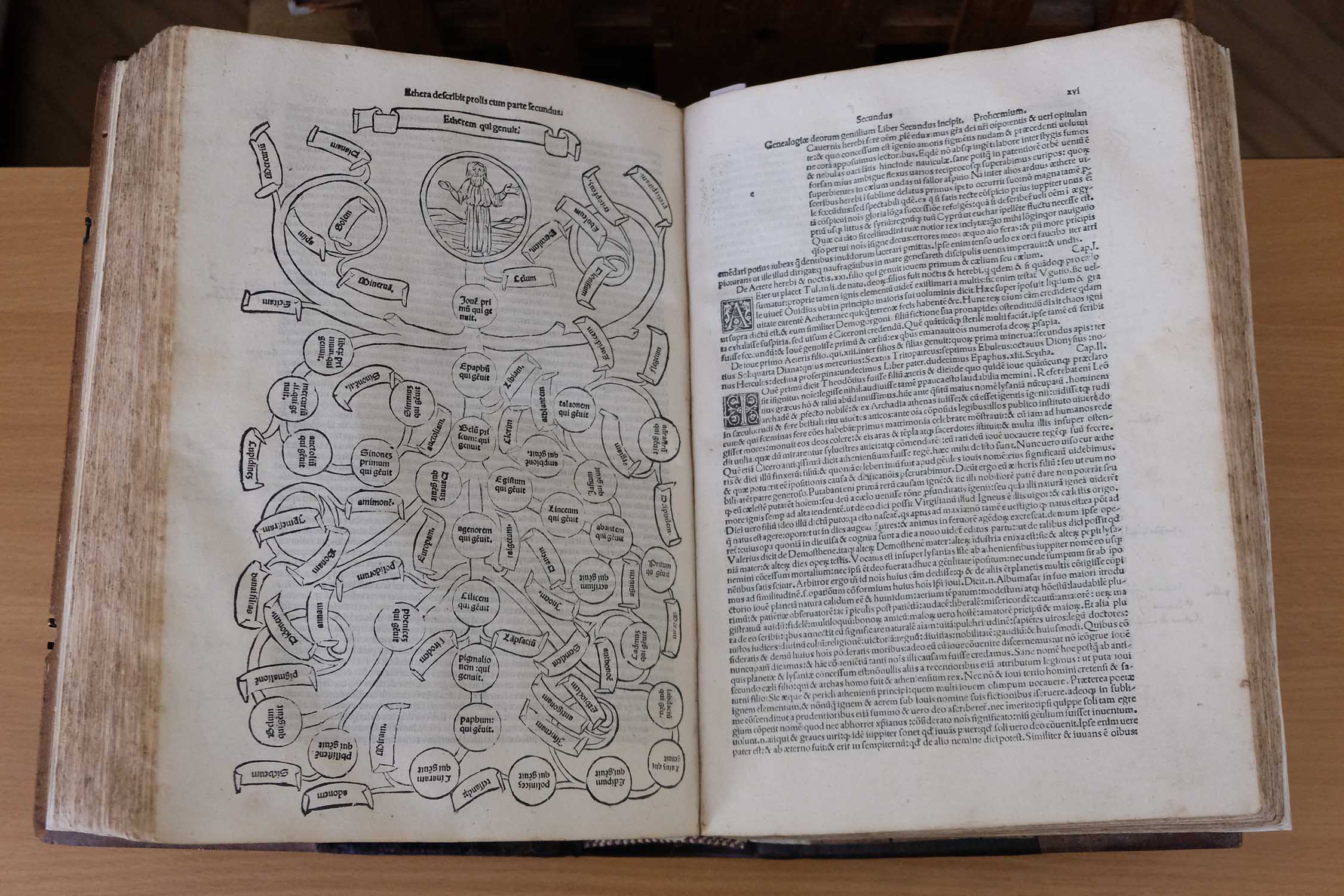
The jewel in the crown of the collection of early printed books is the incunabulum – the oldest item in the collection, a volume comprising two editions:
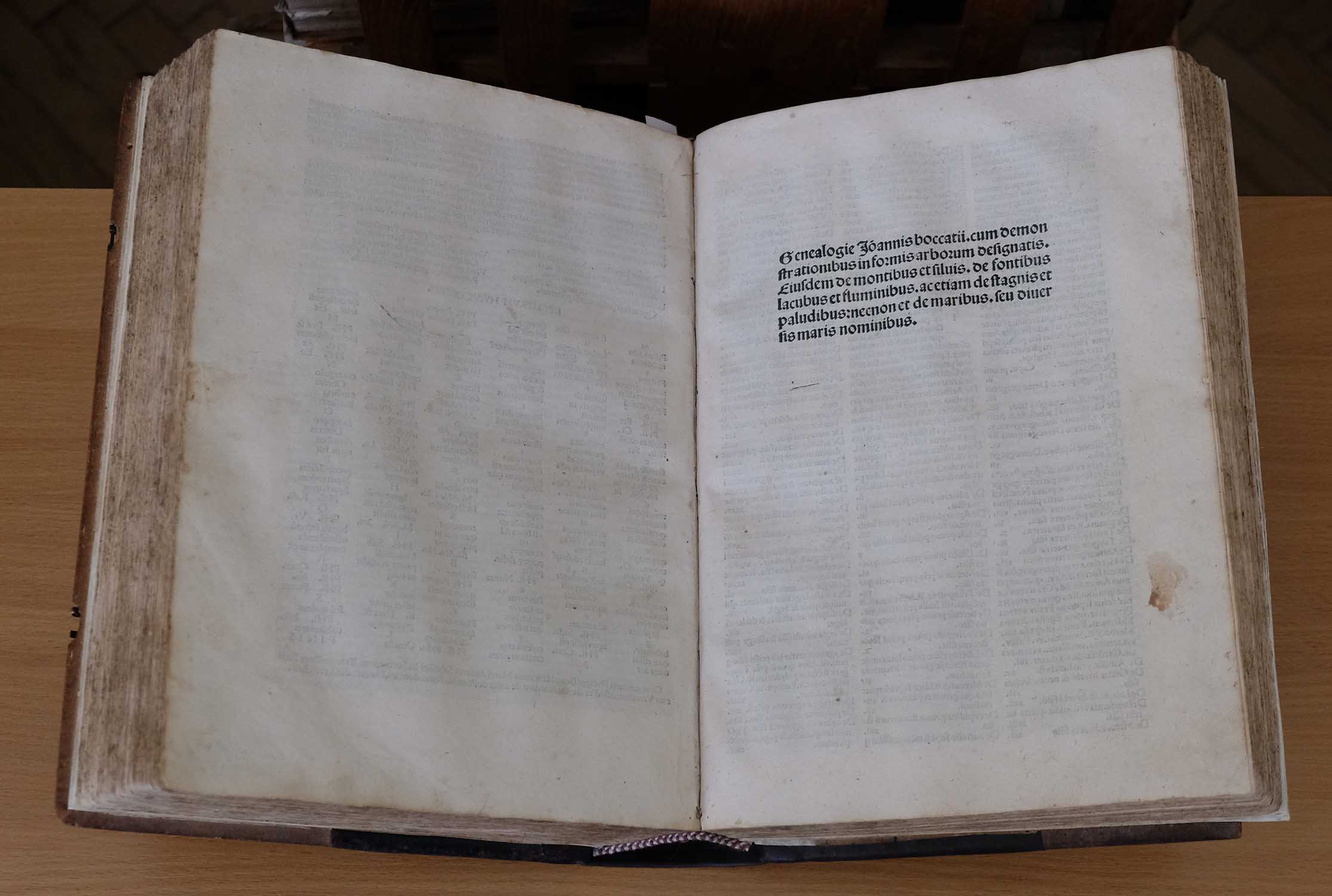
Genealogie Joannis Boccatii cum demonstrationibus informis arborum designatis (The Genealogy of Giovanni Boccaccio with illustrations of stylised trees), 1497.
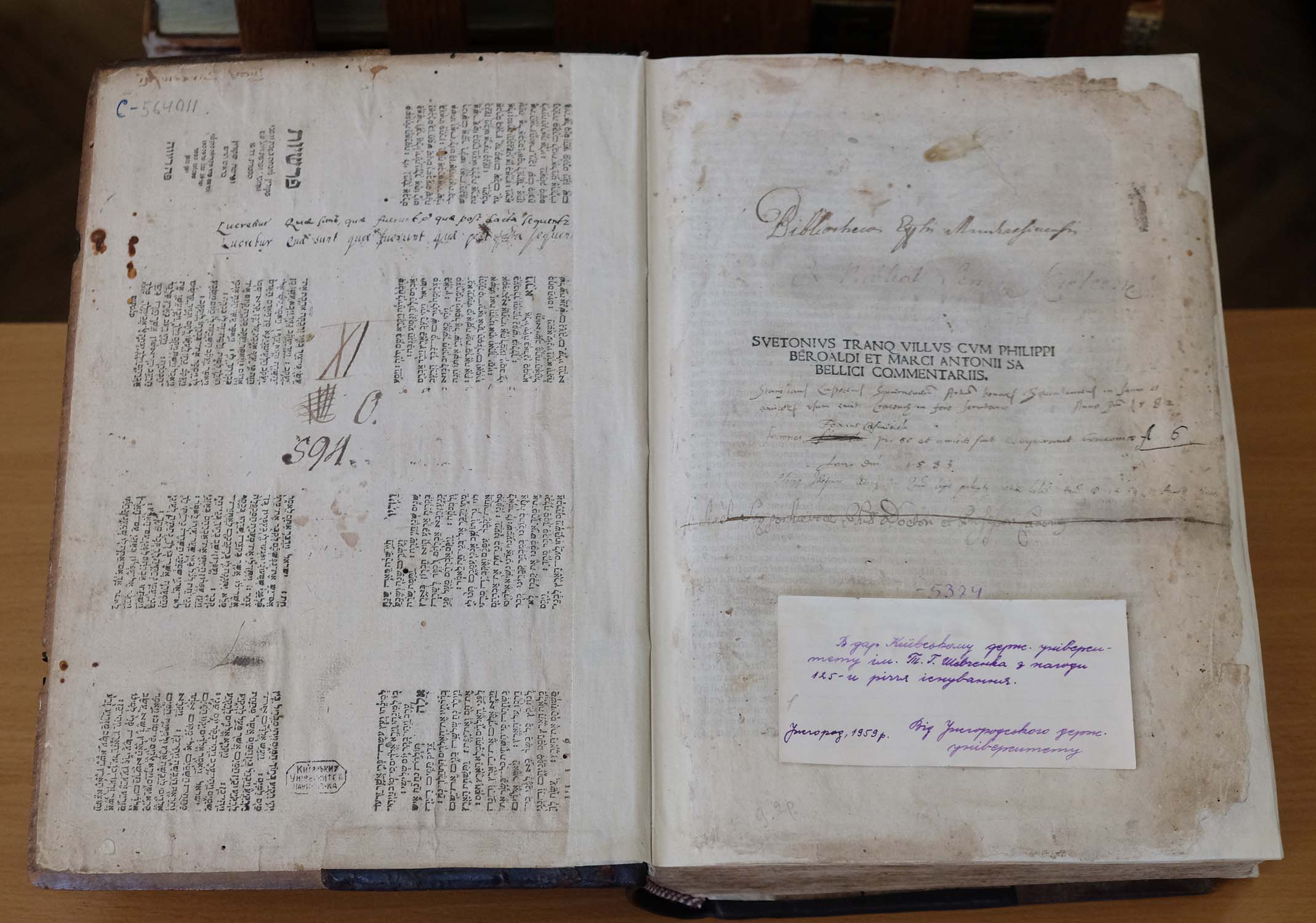
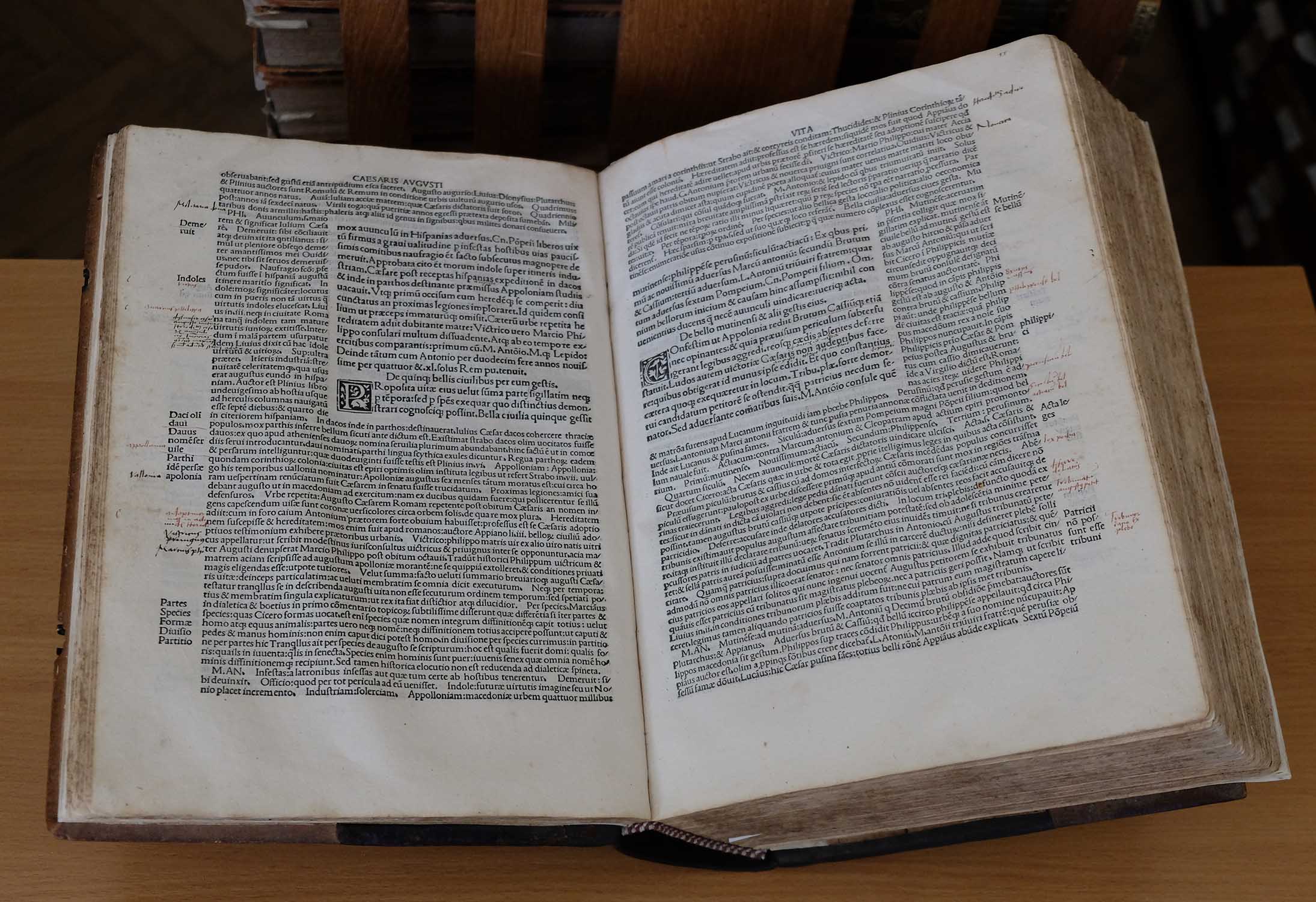
Suetonius Tranquillus with commentaries by Philip Berold and Marcus Antonius Sabellicus, (Suetonius Tranquillus with commentaries by Philip Berold and Marcus Antonius Sabellicus), 1500
Year of publication: 1497, 1550.
Place of publication: Venice, Italy.
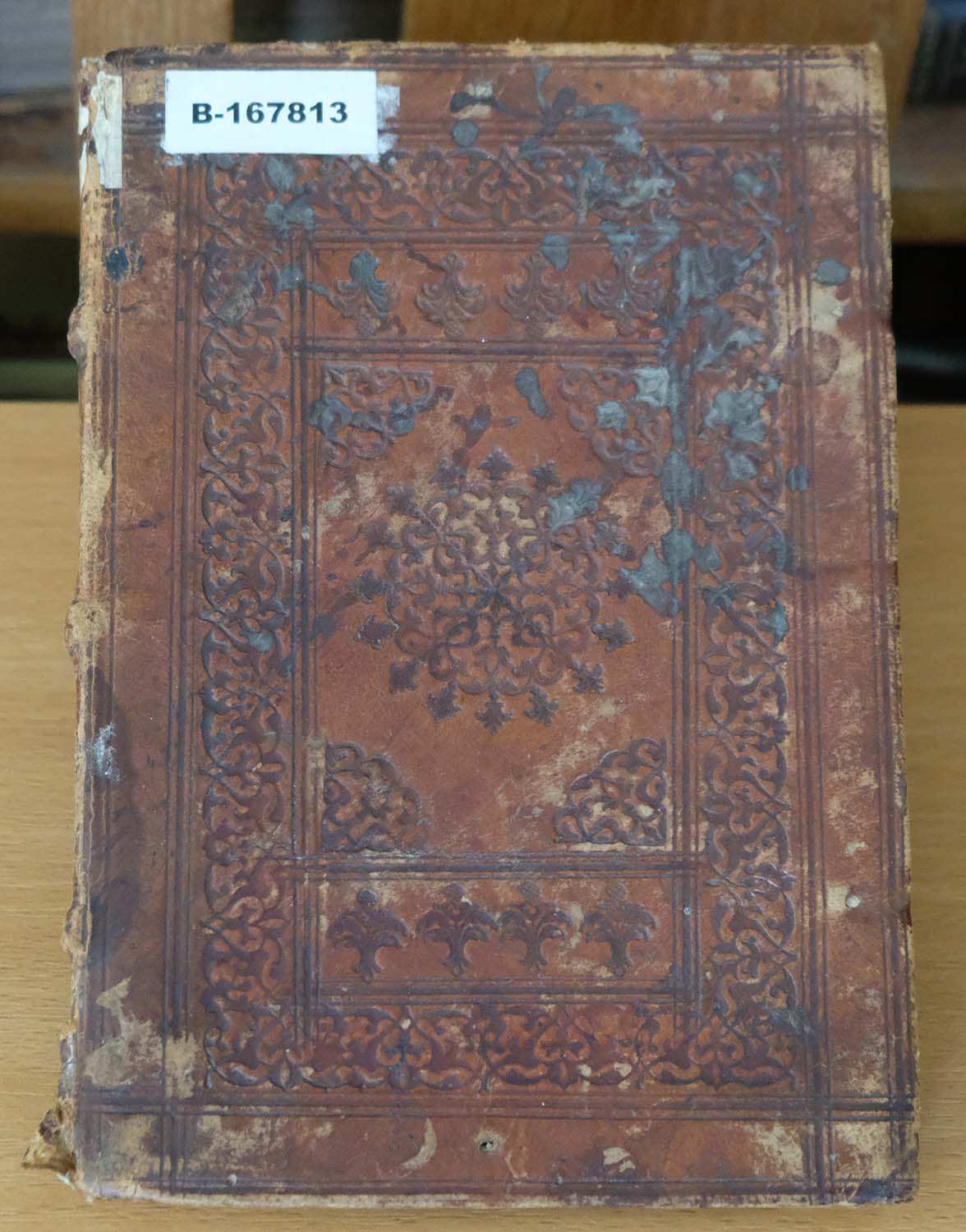
Suetonius Tranquillus cum Philippi Beroaldi et Marci Antonii Sabellici commentariis, 1500
The binding of this copy incorporates fragments of a manuscript written in Gothic script (Fraktur), provisionally dated to the 15th century, as well as pages from the ancient Hebrew edition of “Parashiot”, Riva di Trento, 1562.
Genealogie Joannis Boccatii cum demonstrationibus informis arborum designatis, 1497
The collection of early printed books from the first half of the 16th century – paleotypes – is of exceptional value. The paleotypes include works by ancient authors and figures from the Middle Ages.
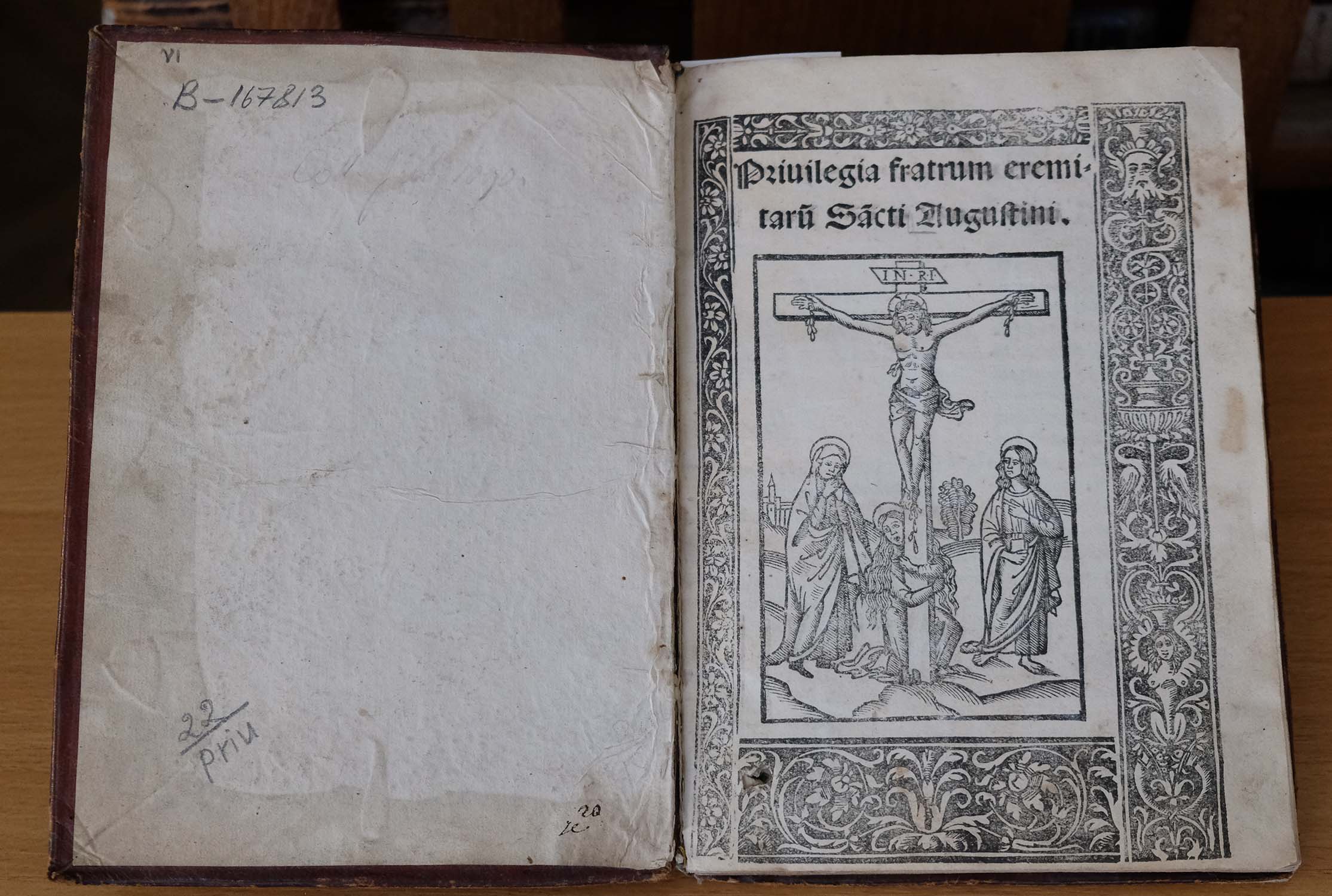
Privilegia fratrum eremitarum Sancti Augustini (Privileges of the Hermit Brothers of the Order of St Augustine), 1515 – the oldest paleotype in the collection.
Year of publication: 1515.
Place of publication: Pesaro, Italy.
Privilegia fratrum eremitarum Sancti Augustini, 1515
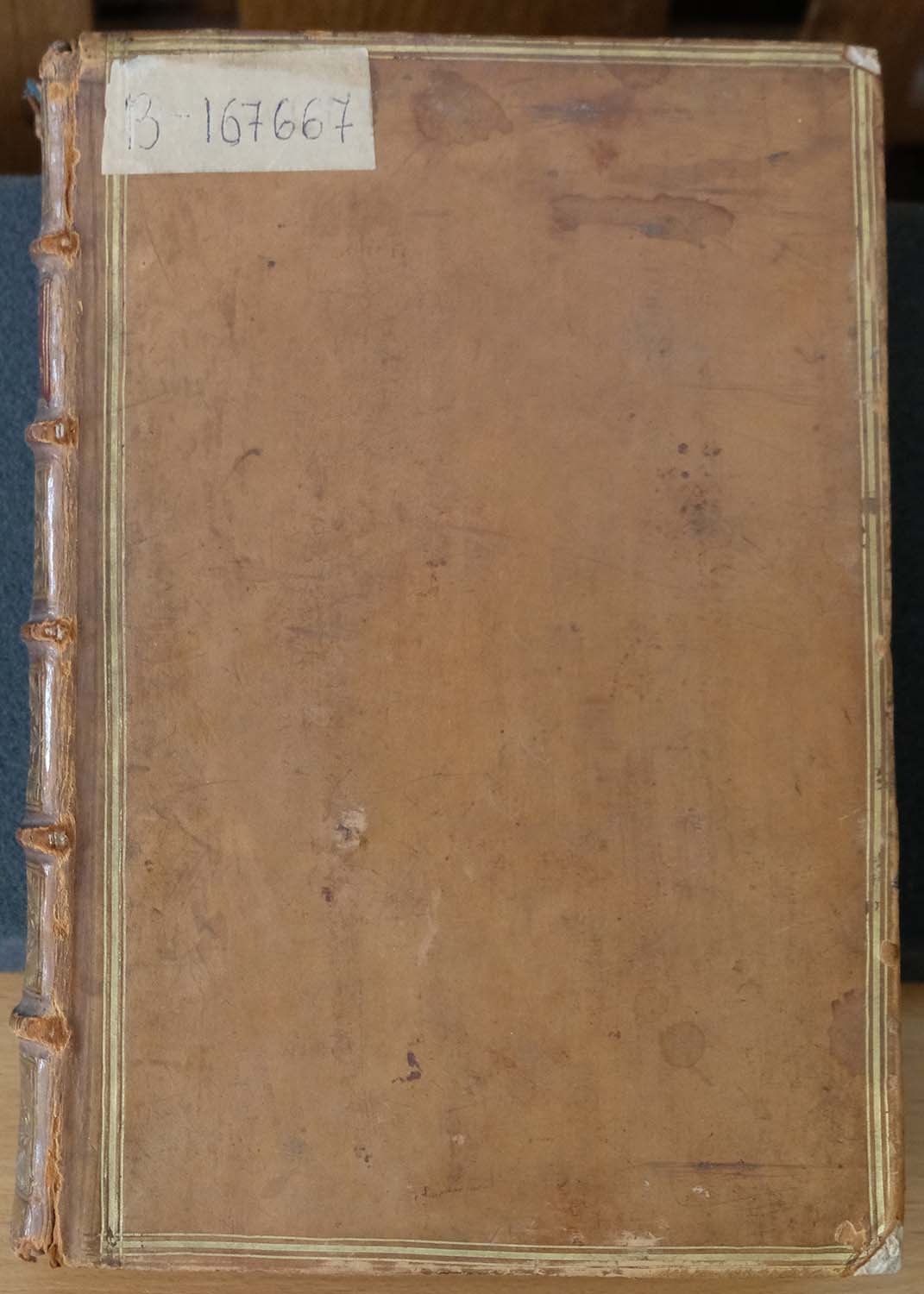
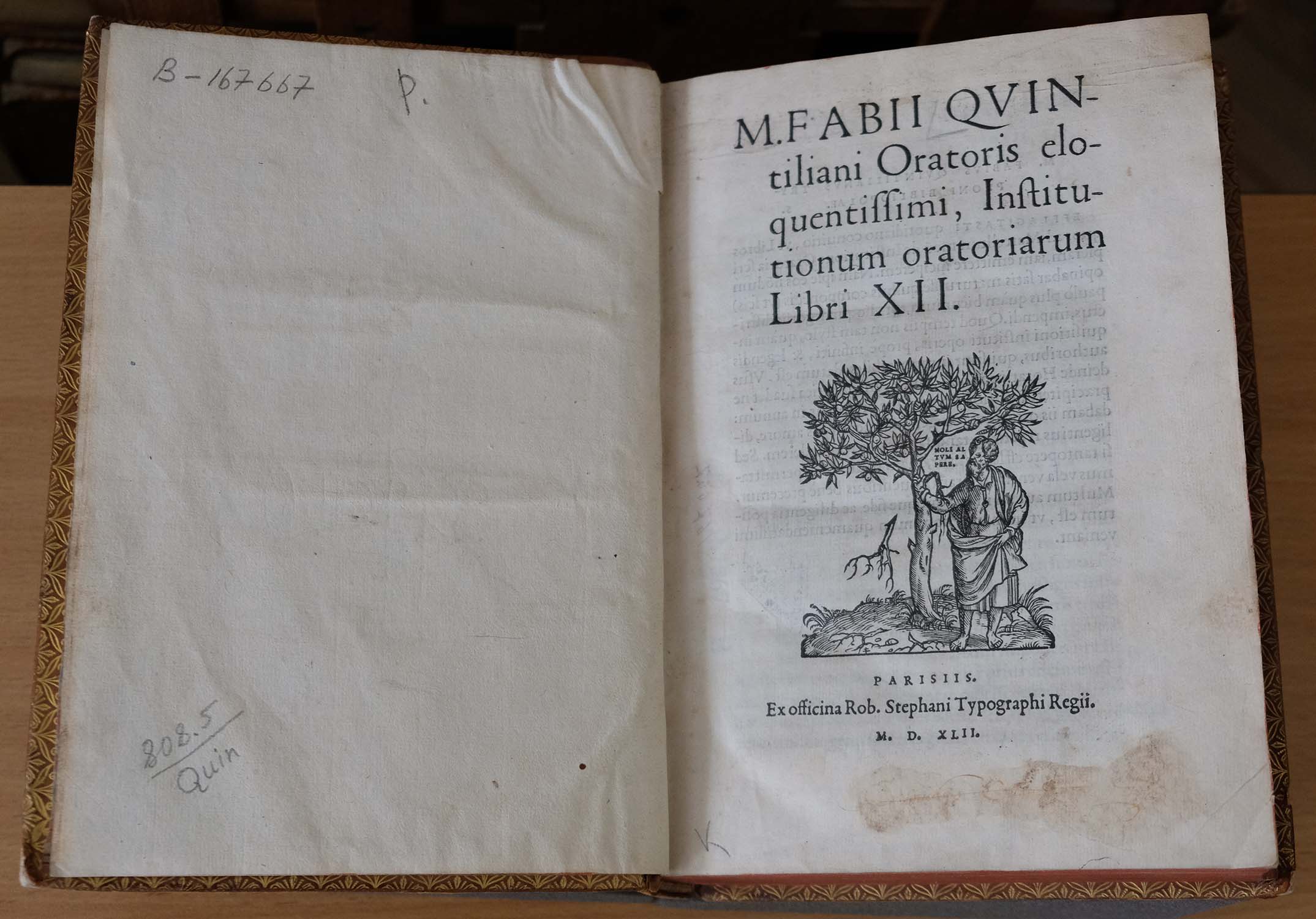
M. Fabii Quintiliani, the most eloquent orator, “Institutions of Oratory”. Book XII (Marcus Fabius Quintilianus. “Institutions of Oratory”), 1542.
Year of publication: 1542.
Place of publication: Paris, France.
M. Fabii. Quintiliani оratoris eloquentissimi Institutionum oratoriarum. Lib. XII, 1542
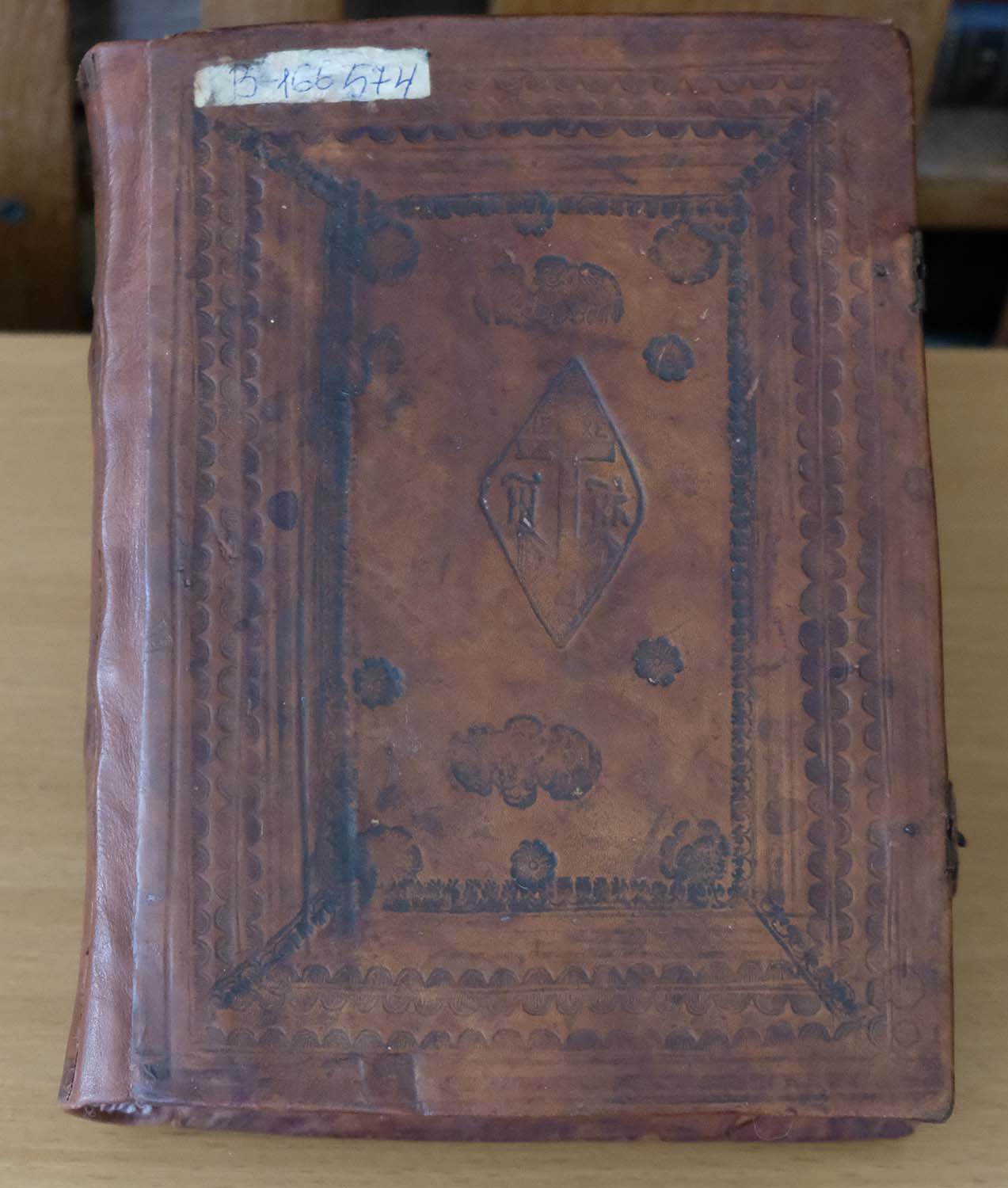
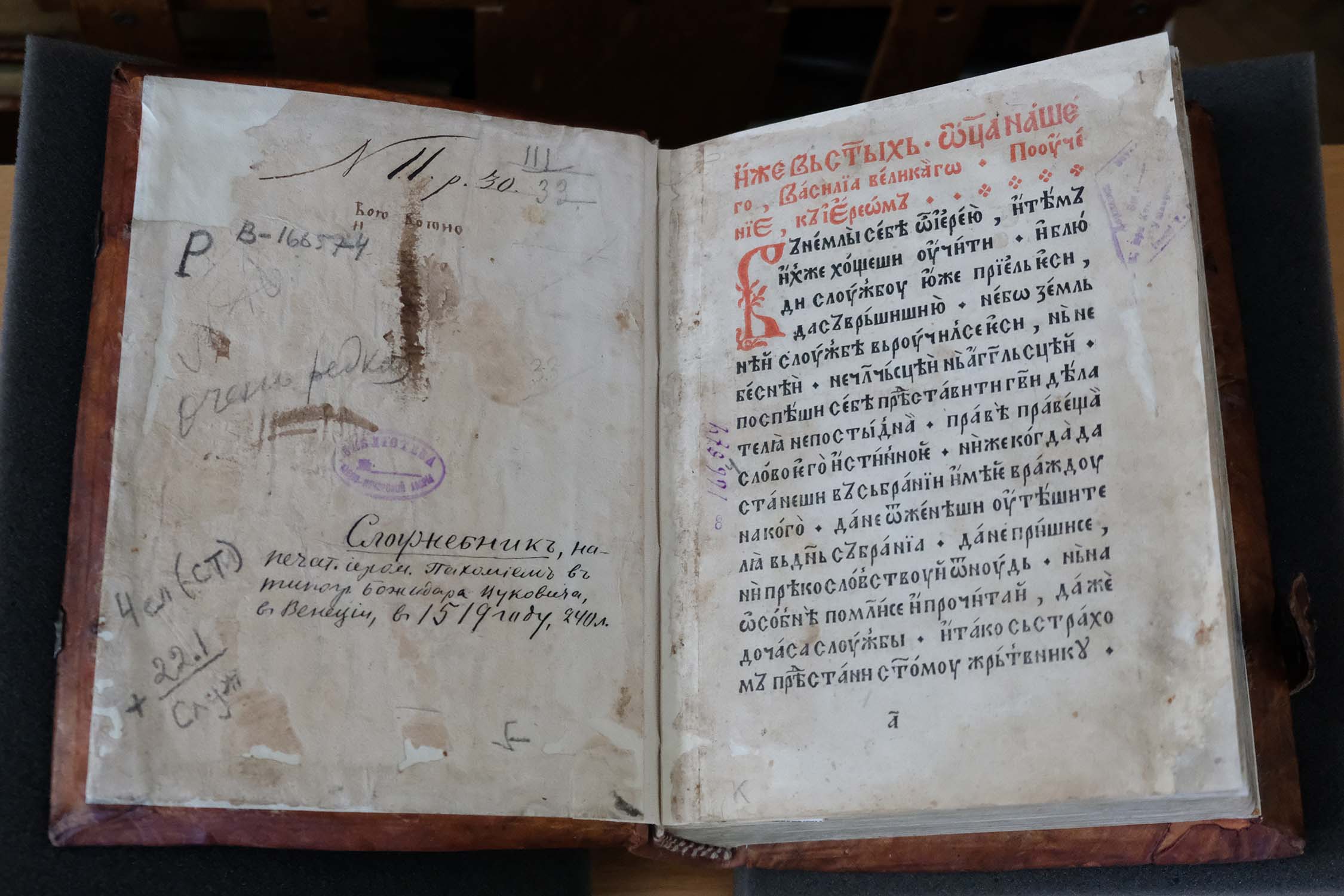
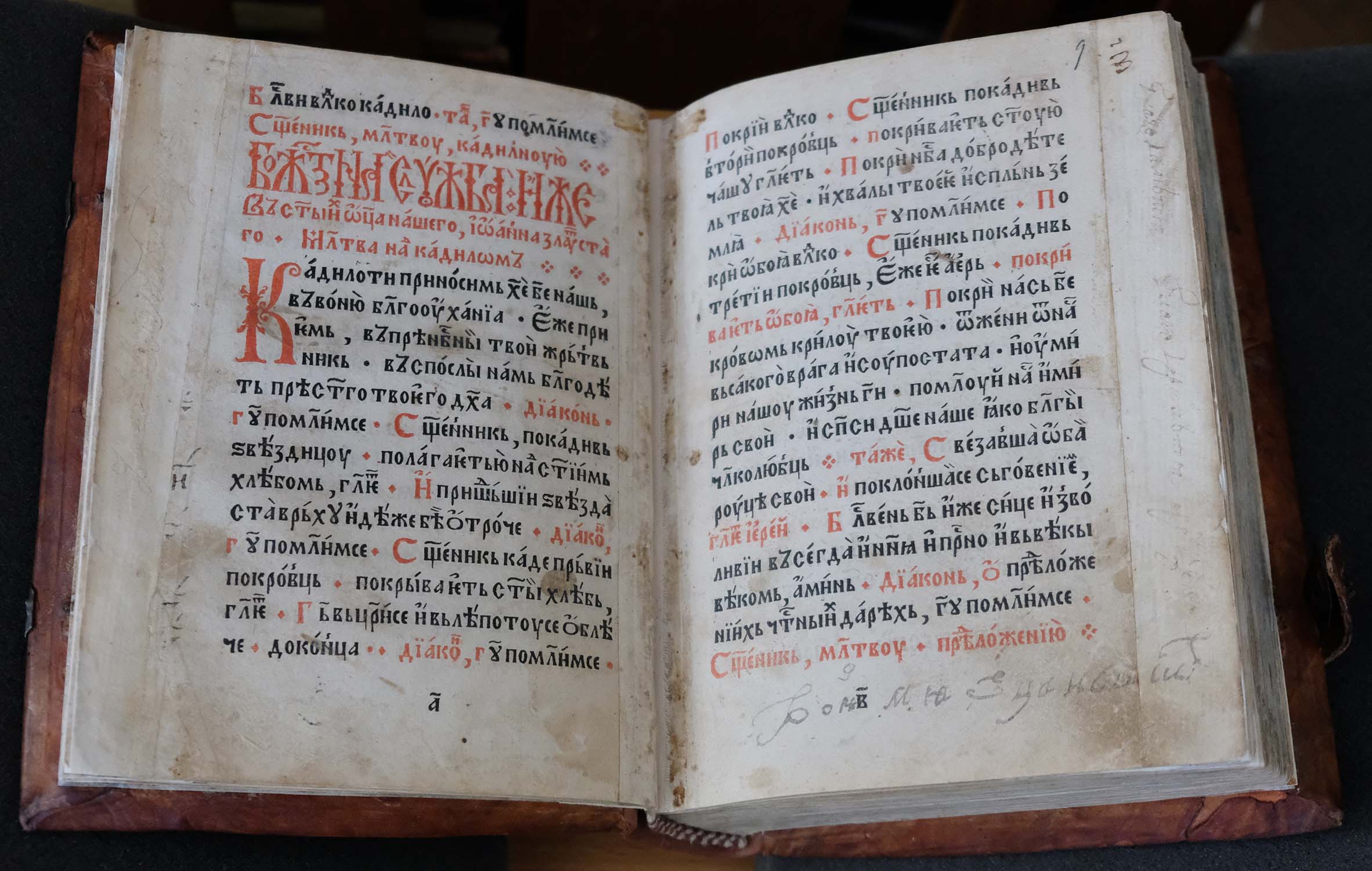
The collection of Cyrillic-script books from the 16th to 18th centuries has attracted considerable interest. A rare example of early 16th-century Cyrillic-script printing and the Old Bulgarian language is the Service Book (printed by Hieromonk Pachomius), which is also a paleotype.
Year of publication: 1519.
Place of publication: Venice, Italy.
Service Book, 1519
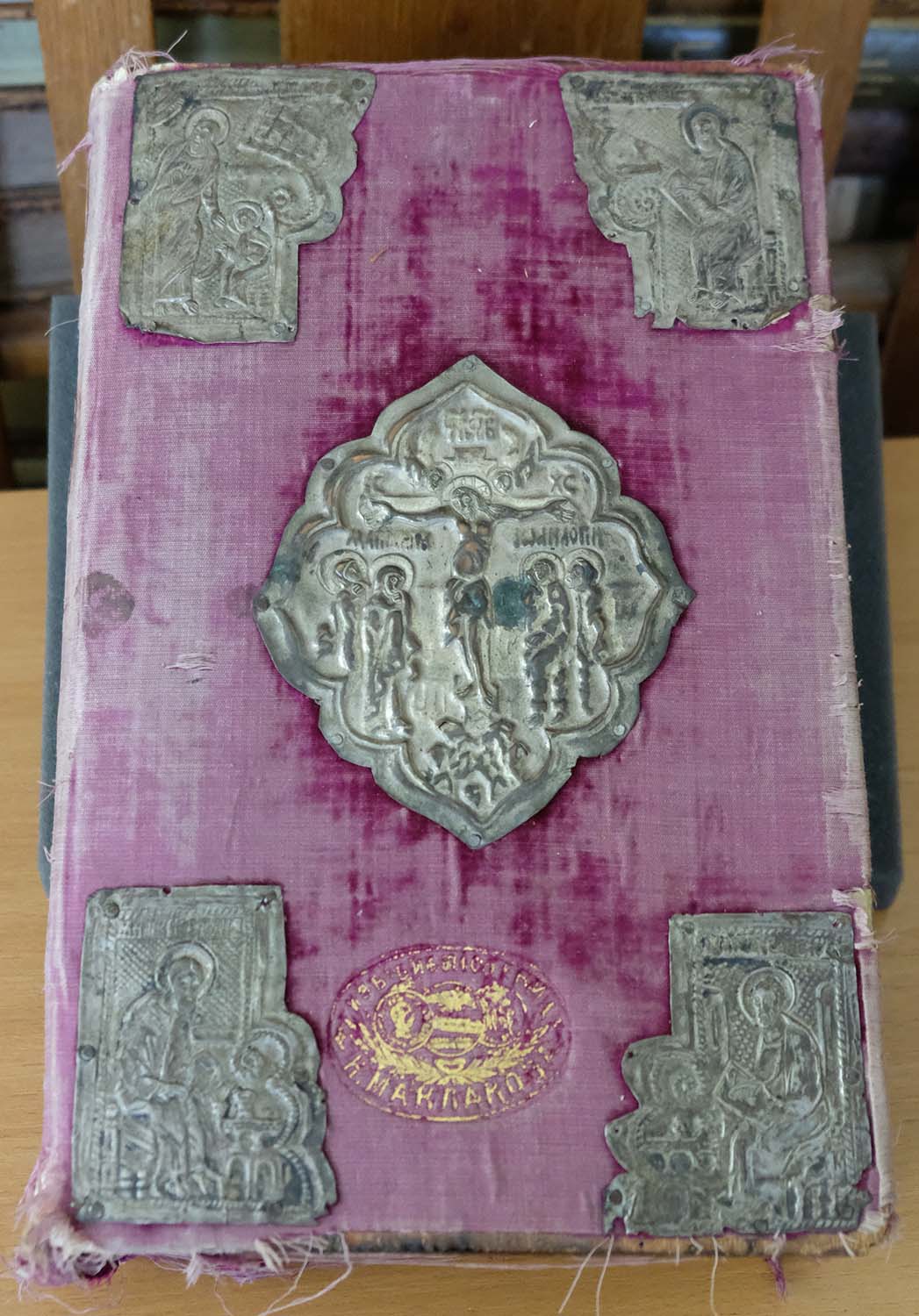
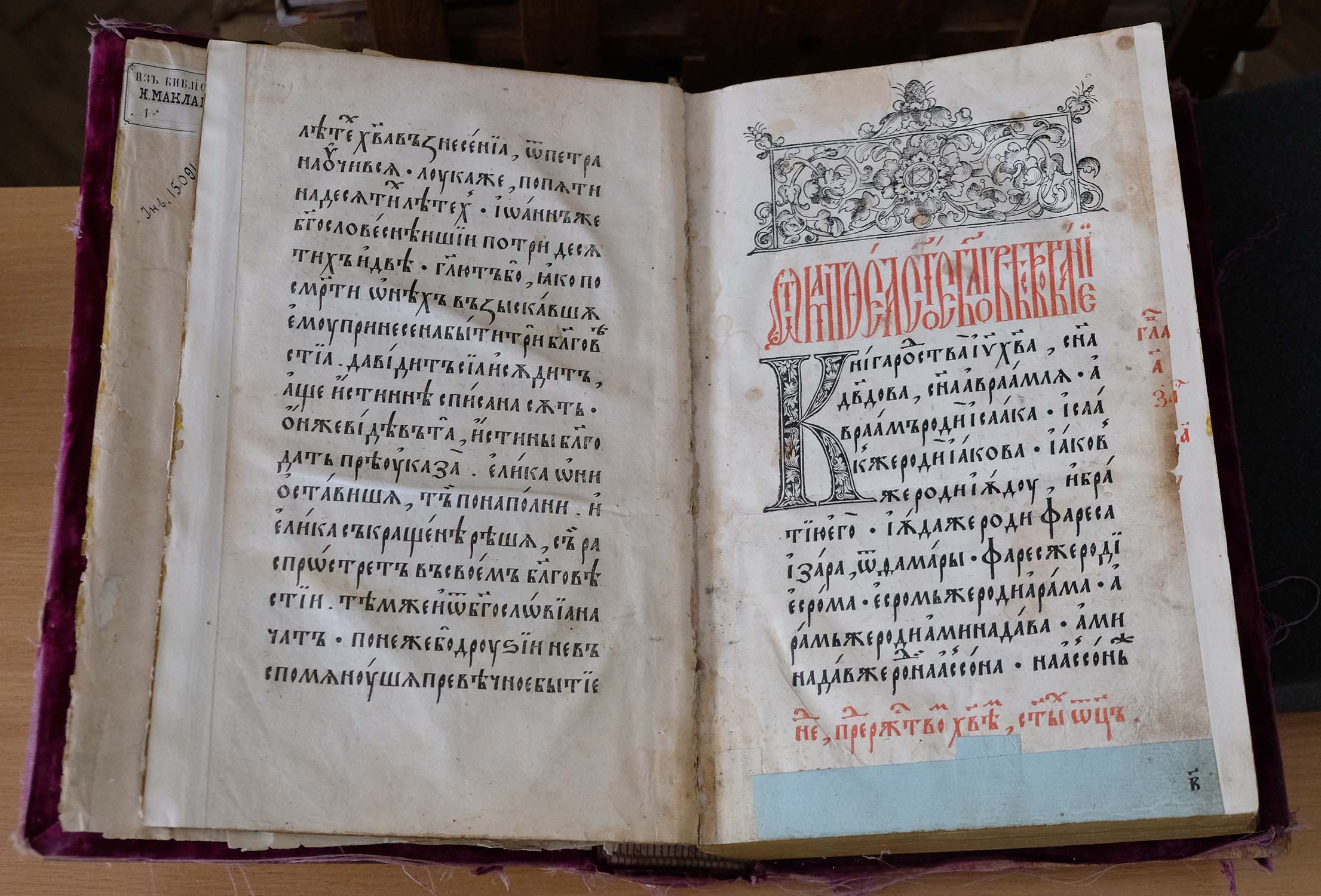
A unique publication from the second half of the 16th century to the first half of the 17th century – the Vilnius Gospel, printed at the Mamonich printing house.
The *Altar Gospel*, published by the printer Petro Mstislavets, was the first book produced by this publishing house.
Year of publication: 1575.
Place of publication: Vilnius (now Vilnius, Lithuania).
Altar Gospel, 1575
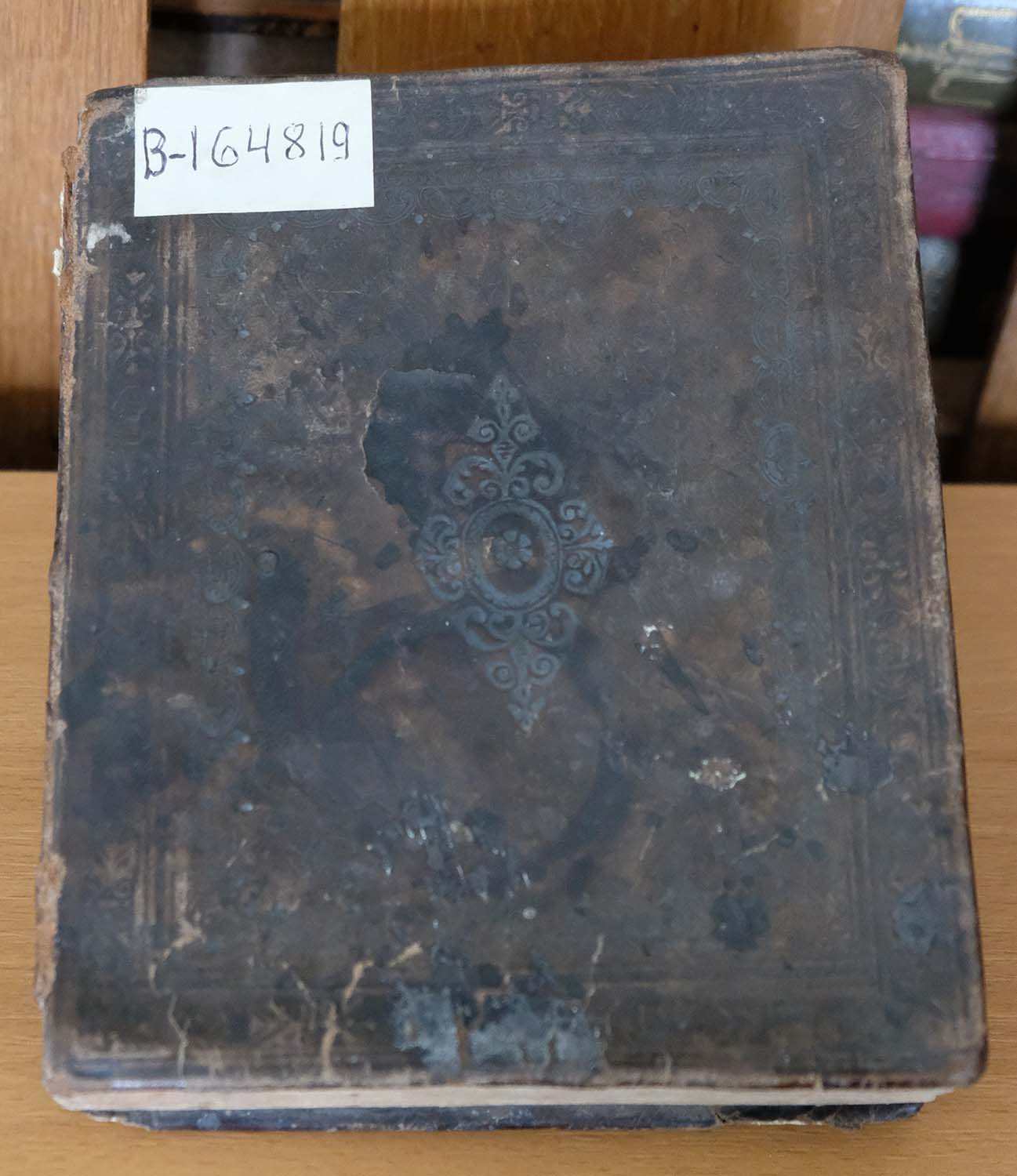
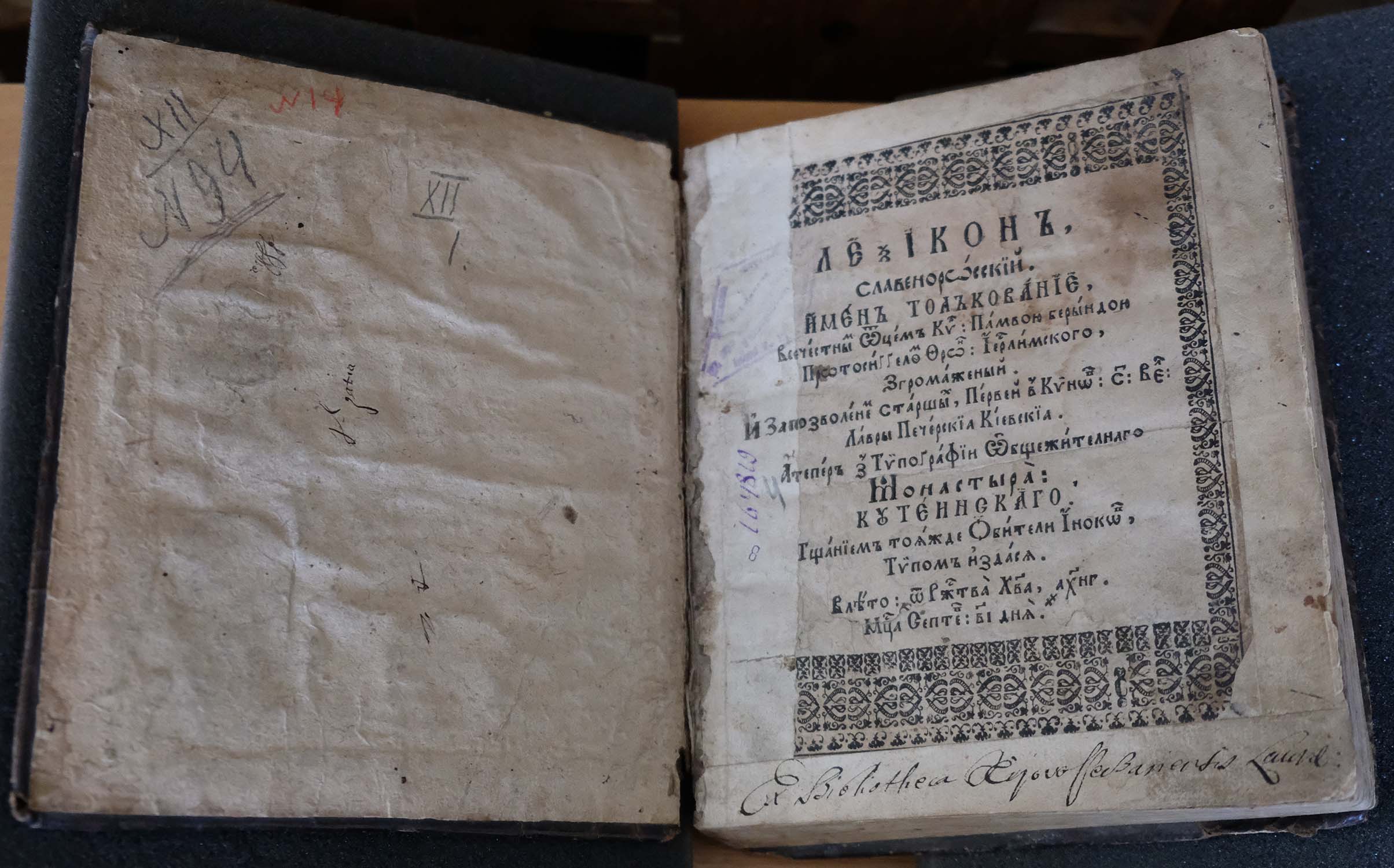
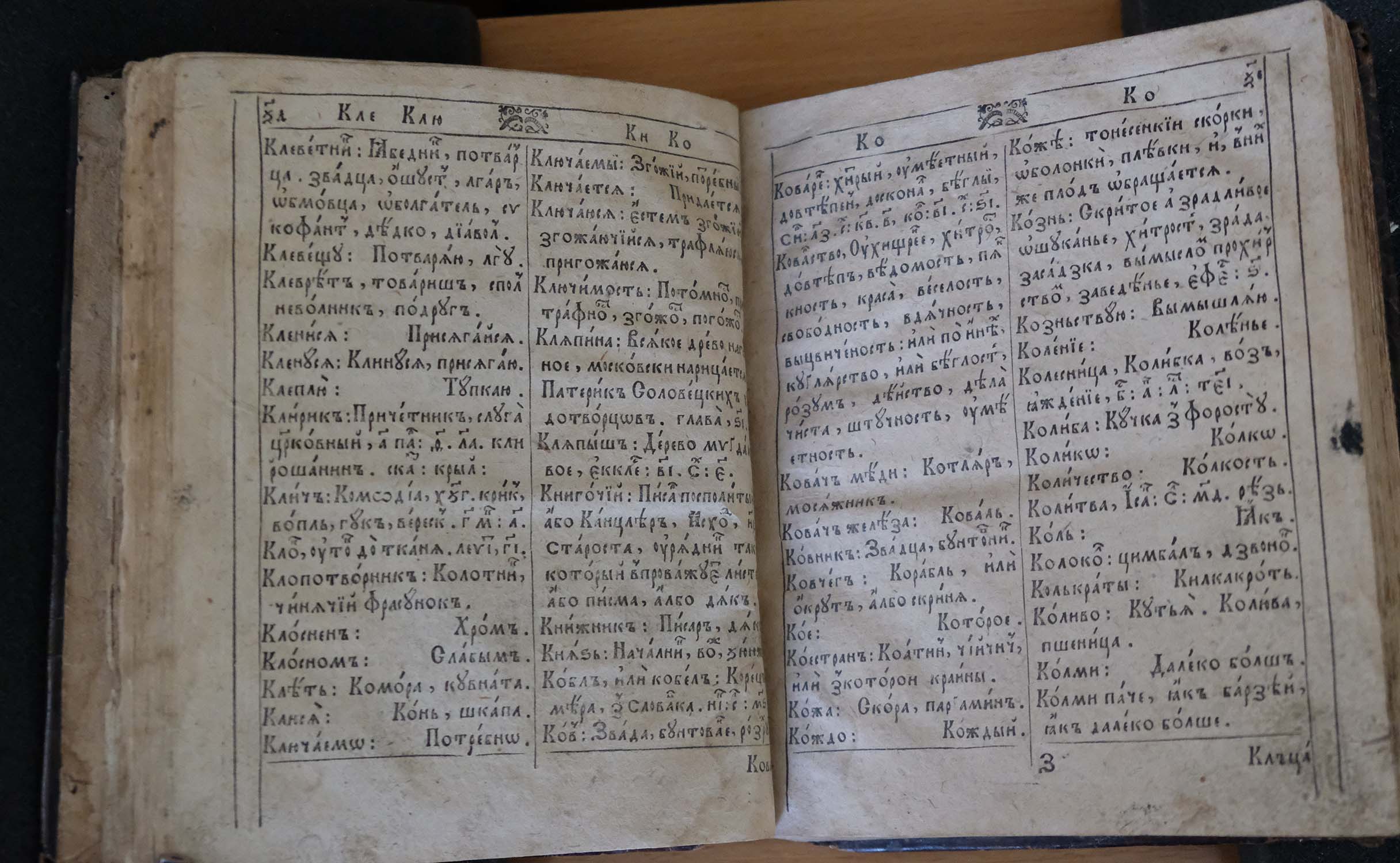
Among the publications in Cyrillic script, secular works are particularly noteworthy. Of great value is Pamva Berinda’s book “Lexicon of the Slavic-Russian Language”, the first printed dictionary in Eastern Europe. Pamva Berinda — printer, engraver, philosopher and writer. From 1616, he worked at the printing house of the Kyiv-Pechersk Lavra, where he was awarded the title of chief printer.
Year of publication: 1653.
Place of publication: Kutein (now Kutein, Belarus).
‘Lexicon of the Slavonic-Russian Language’, 1653
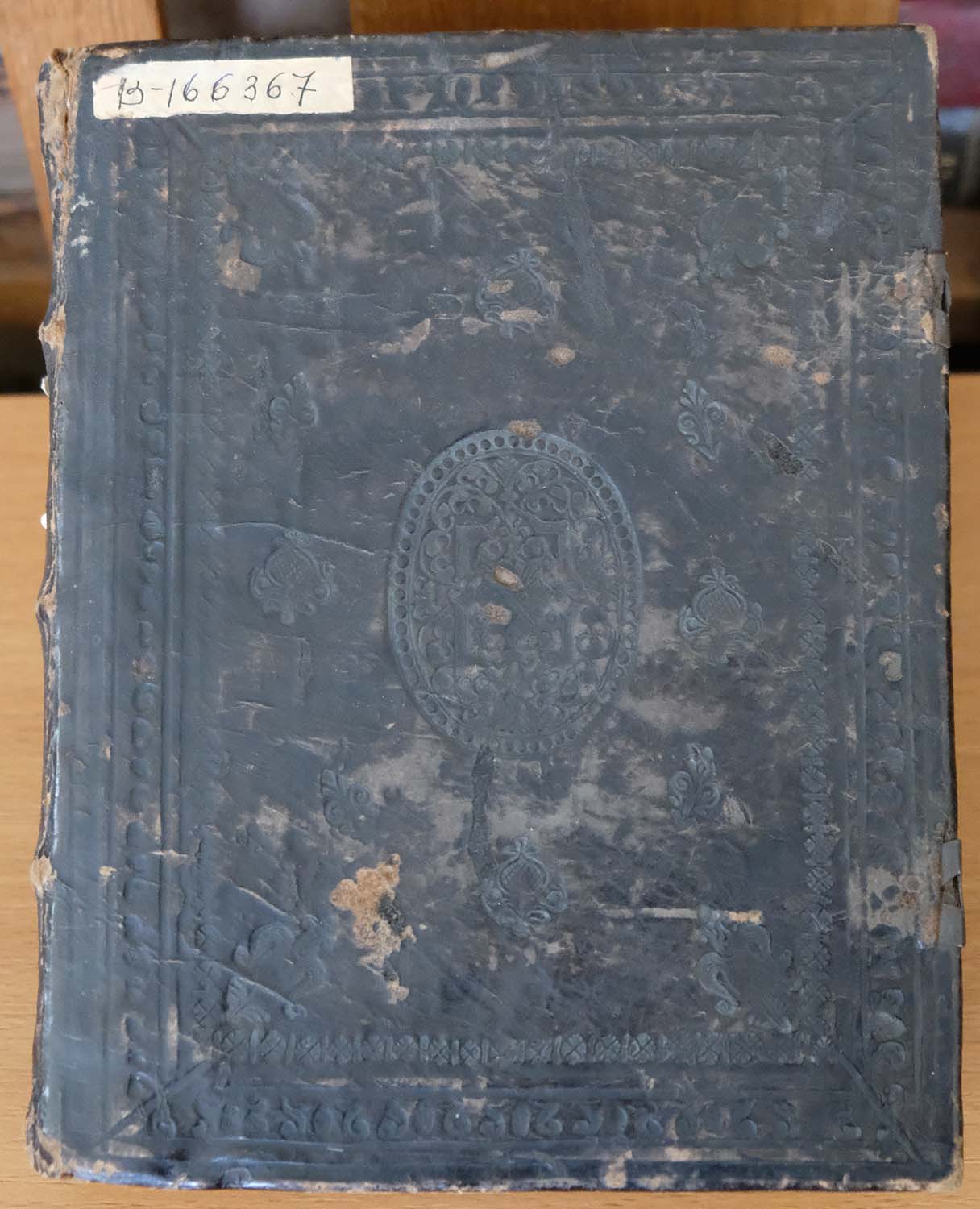
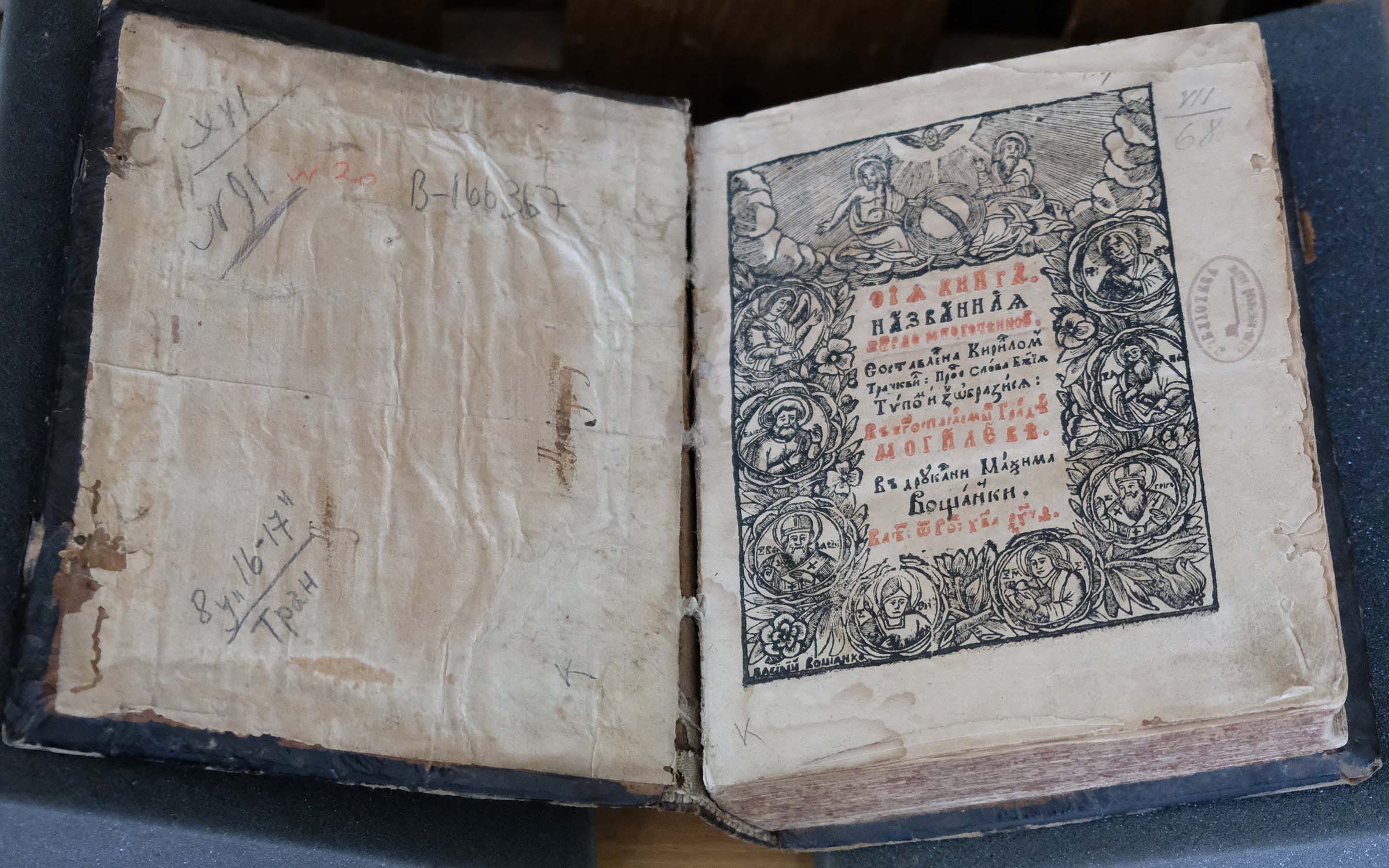
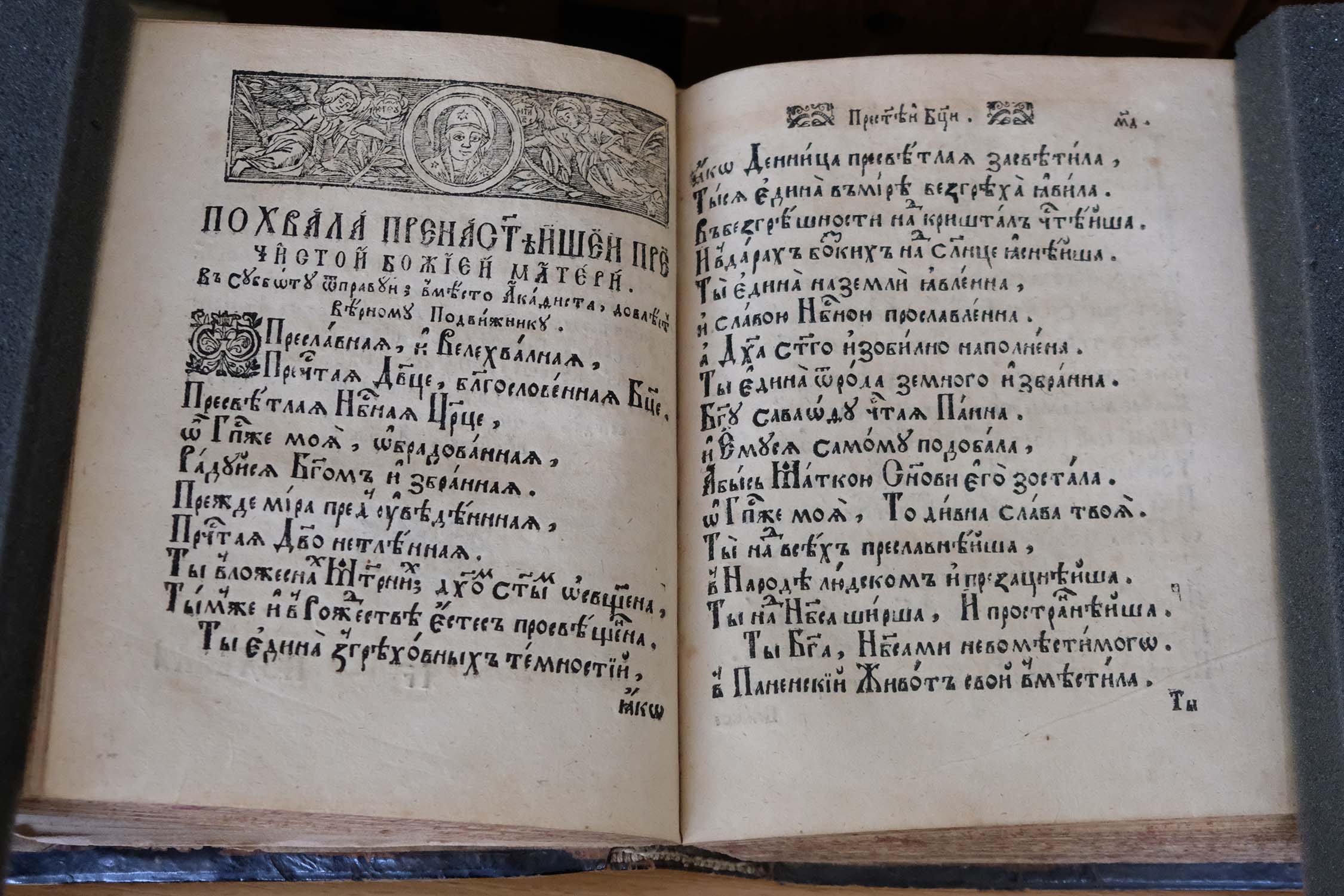
A special place is held by *Perlo Mnohochynne* – a work by the Ukrainian church figure, educator and writer Kyrylo Tranquillion-Stavrovetskyi, one of the rare publications in Old Ukrainian. The work was originally intended for educational purposes, but is now regarded as a monument to 17th-century Ukrainian culture. ‘The Precious Pearl’ consists of sections, each bearing the name of a day of the week, as well as several prose pieces and 21 poems. The poems are written in the style of spiritual literature with elements of folk poetry, particularly Ukrainian folk ballads.
Year of publication: 1699.
Place of publication: Mogilev (now Mogilev, Belarus).
‘The Precious Pearl’, 1699
Rare Books and Manuscripts Department
In 1983, early printed, rare and valuable books were separated from the library’s general collection and placed in a separate unit, which in 2004 became the Rare Books and Manuscripts Department. The main focus of the department’s staff is on creating and maintaining conditions for the careful preservation of the collections, and for the research and use of these documents in academic work and the teaching process. Another priority is the promotion of book collections that form part of the national heritage. The RBM collection is used for anniversary and travelling exhibitions; guided tours and thematic literature reviews are organised using the department’s materials for visitors and guests of the university from other cities in Ukraine and from many countries around the world.
Recognition of the fund
In 2021, the collection of early printed, rare and valuable books at the M. Maksymovych Scientific Library was entered into the State Register of Scientific Objects Constituting the National Heritage of Ukraine by a decision of the Cabinet of Ministers. The M. Maksymovych Scientific Library participated in the Project for the Preservation of Cultural Heritage for Future Generations within the framework of the European Cultural Convention. The significance of the collection of early printed, rare and valuable books as a cultural heritage site is evidenced by the inclusion of some of its items in the international ‘Europeana’ project.
Documents are currently being digitised, catalogued and prepared for use in future research and educational projects. One third (around 3,500 items) of the collection of early printed books has been fully digitised, whilst another third has been partially digitised. These digitised copies now need to be preserved in a different format and transferred to a new, more user-friendly digital platform.
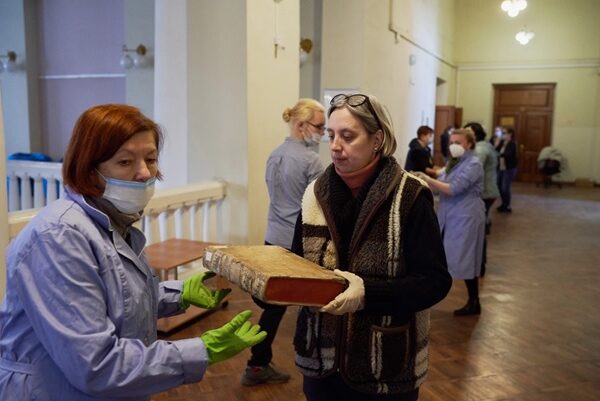
On 10 October 2022, another Russian attack struck the area near the Scientific Library. The wing of the library building housing the Rare Books and Manuscripts Department’s collections was the worst affected. The items in the collection were not damaged, but a decision was made to move them to other rooms in the library, where they are currently being stored.
Photo by Valentyn Kuzan. From the article ‘Dialogue with Maksymovych’ on the ‘Science at Risk’ platform
The department is temporarily located in room 16 of the main building at 58 Volodymyrska Street.